
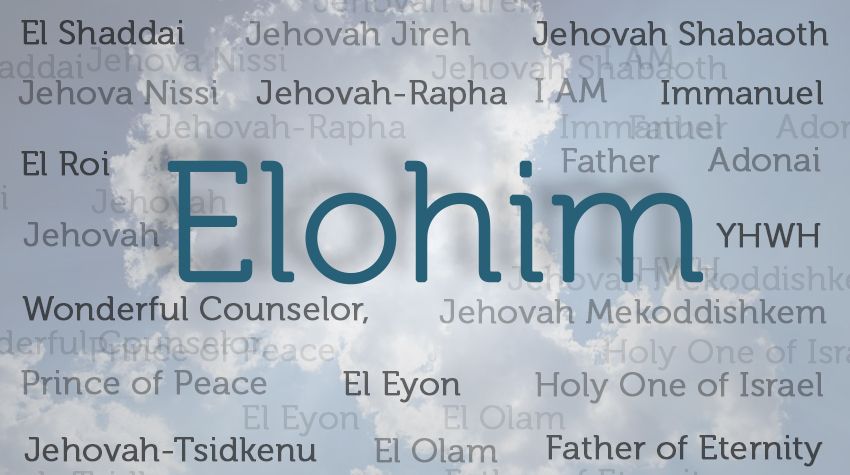
The word most frequently utilized for God in the Jewish Book of scriptures is Elohim. Many think elohim is a name for God, yet as we will see, the word and its use in the Good book isn’t a name for God.
“Elohim” is found multiple times in the Jewish Hebrew Scripture. The Jewish word elohim can be particular or plural, similarly as our English word “deer” can indicate one or a few deer. While alluding to the maker God elohim is promoted.
Elohim is utilized to signify the genuine God. (Beginning 1:1; Isaiah 2:3; Song 50:1) It is additionally utilized regarding bogus or unfamiliar divine beings and goddesses. (Departure 20:3; 32:1 Song 82:1) It is utilized of heavenly messengers (extraordinary spirits) in Hymn 8:6; 97:7; 138:1.
In 1 Samuel 28:13, Samuel’s existence in the wake of death appearance before the witch of Endor was called an elohim. “Furthermore, the ruler said unto her, Be not apprehensive: for what sawest thou? What’s more, the lady said unto Saul, I saw divine beings (elohim) rising out of the earth. “
Moses was alluded to as an elohim in Departure 4:16 and 7:1. Moses was not a divine being, but rather he was God’s delegate and in this job, he was viewed as remaining in the job of an elohim. Departure 7:1 “And the Master said unto Moses, See, I have made you a divine being (elohim) to Pharaoh: and Aaron thy sibling will be thy prophet.”
The shoftim (judges-lead representatives) were called elohim in Mass migration 21:6; 22:7, 8, 27. “Then, at that point, his lord will bring him unto the appointed authorities (elohim); he will likewise carry him to the entryway, or unto the entryway post; and his lord will drill his ear through with an aul; and he will serve him for ever.” Departure 21:6
- https://colab.research.google.com/drive/16lxVb-zJgadJpQuqlkThWCH-dkDMlhkl
- https://colab.research.google.com/drive/1V64bmtBQZleq63kPMdOVlV3sRzF29AKl
- https://colab.research.google.com/drive/1gyjyqI-zskbyhAoUYujV5Q9DHst2VF-u
- https://colab.research.google.com/drive/1MjtNK5-oWZn7DTW80K6bdorSkX0hl6LK
- https://colab.research.google.com/drive/1dQsM9WW4Z_HTVcbI4ytU2nORHydpuCkQ
- https://colab.research.google.com/drive/1rjDdoxha2JrnOwADxu_713tcMFcqWcNY
- https://colab.research.google.com/drive/1ikfwxTdtRerli_-tIIM1IPc-vUCnB49J
- https://colab.research.google.com/drive/1Lh3fAepKc5ZKh4ZnaBiRMNgt-CcmULGU
- https://colab.research.google.com/drive/1-O29TOTg0DB2RgtgqvdBgBYKAnjoyugh
- https://colab.research.google.com/drive/15c6HZ8EtqiuM8VlEZ4C8c2LROl-Oxgwp
In Hymn 45:7, the Messianic ruler is alluded to as an elohim. On the other hand, we realize that Jesus was God. He was not only an elohim, he was the Elohim, the maker God.
At the point when we see the word God (capital G), we will quite often ascribe specific credits to that word. The properties of the greatest God, the Lord of Beginning 1:1. In any case, as currently shown, the actual word doesn’t convey those credits, rather the setting of its use figures out who or what is being examined.
When utilized of the genuine God, “Elohim” indicates what is called by language specialists a plural of magnificence, honor, or totality. That is, he is GOD in the fullest feeling of the word. He is “Divine force of divine beings” or in a real sense, “ELOHIM of elohim” (Deut 10:17; Ps 136:2). “For the Master your God will be Divine force of divine beings, and Ruler of masters, an incredible God, a strong, and a horrendous, which regardeth not people, nor taketh reward: ” Deuteronomy 10:17
Multiple times elohim assigns holy messengers (non-human workers of the one God) or unfamiliar, agnostic divinities. The Book of scriptures avows that numerous creatures exist in something similar “elohim class” as the one preeminent Elohim. That is, there are extraordinary, semi-divine creatures other than God. So “elohim” appears to detestable mean just “Divinity” or “deity(ies).” And the term doesn’t, intrinsically, let us know if they are great or.
According to the first of the Ten Edicts, “I’m YHVH your Elohim… you will have no other elohim in my presence” (Exod 20:2-3).
In Sacred text individual divine beings and one goddess, like Dagon, Chemosh, Baal, Ashtoreth, can be called an elohim (1 Samuel 5:7; 1 Lords 11:33; 18:24; 1 Rulers 11:5).
In the Holy book, God is the fulness, significance, or entirety of god. In him dwell every one of the powers and appearances exemplified in “God.” To call him Elohim underscores his preeminent height as divinity. He is likewise incomparable Master (Adonim) over all human creation. Be that as it may, his sway is likewise by and by experienced by a devoted offspring of his, who can refer to him as “my Master” (Adonai).
All through the Jewish Book of scriptures, God is known as Elohim corresponding to non-Israelites. To his pledge individuals he further uncovered himself through his own name (YHVH). Then, in the New Confirmation, he extended the disclosure of his contract name through his Savior who wore his name face to face.
 Scienology
Leave a comment