
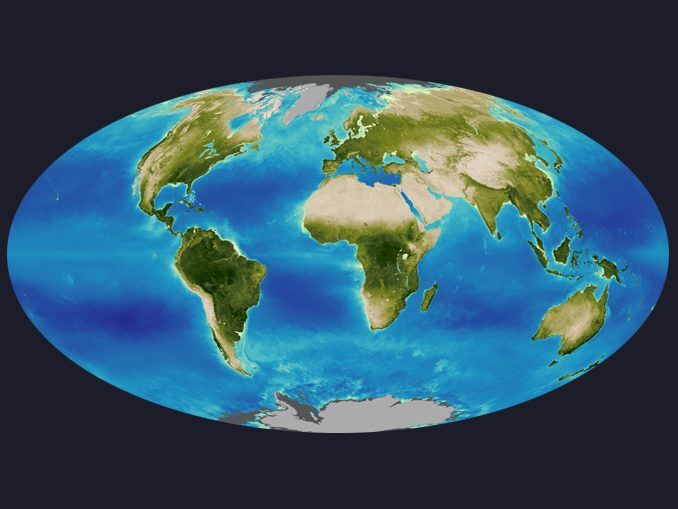
Dorion Sagan’s 1990 soft cover Biospheres: Imitating Planet Earth (McGraw-Slope Distributing, ISBN 0-553-28883-0) accomplishes more than convey a novel vision of the planet’s life emotionally supportive network. It likewise challenges the conventional perspective on mankind as the predominant aspect of life on The planet.
Maybe that is something like ought normal from the posterity of stargazer Carl Sagan and scientist Lynn Margulis, whose irregular perspective on developmental science sees living things converging to create new ones. Sagan the more youthful is notable as a writer of books on culture, development, and the way of thinking of science.
Ecospheres to Biosphere 2
Among the additional fascinating elements of the book are the notices of as yet existing establishments that are suddenly withstanding highlights of the monetary and innovative scene.
For instance, Ecospheres Partners in Tucson, Arizona produces and sells fixed glass balls loaded up with water containing green growth, other minute biota, and small shrimp in a harmonious local area that outlines the standard of shut life support. It is one delineation of what Sagan calls “forever reusing frameworks.” Called EcoSpheres, they arrive in different sizes, from 4 crawls in width to 9 inches, are valued like little kitchen machines, and have “substitution periods” of as long as a year. With care, they can keep going for a long time. EcoSpheres are a NASA spin-off, the main result of US trials to make shut environments, at last for people in space territories.
“Bioshelters”, terrestrial biospheres for people, families, and little gatherings, were a result of the gone-yet not-failed to remember New Speculative chemistry Organization (1969-1991). Between Apollo 11 and Biosphere 2, New Speculative chemistry assembled a few bioshelters it called “arks” at Cape Cod Massachusetts, Ruler Edward Island (eastern Quebec), and different spots. The Green Place at Hatchville, Mama saves New Speculative chemistry’s data heritage.
- https://portfolium.com/entry/smartly-pass-with-az-900-exam-dumps
- https://portfolium.com/entry/confidently-pass-with-clf-c01-exam-dumps
- https://portfolium.com/entry/proven-success-with-csasp-exam-dumps
- https://portfolium.com/entry/proven-success-with-das-c01-exam-dumps
- https://portfolium.com/entry/wanna-certified-try-dbs-c01-exam-dumps
- https://portfolium.com/entry/smartly-pass-with-dop-001-exam-dumps
- https://portfolium.com/entry/proven-success-with-dop-c02-exam-dumps
Sea Circular segments Global, established by similar individuals who brought you bioshelters, made oneself supporting oceangoing vessels referenced in Biospheres. What they would call cruising Earth’s seas as little ocean provinces, without reliance on anything nonrenewable, including non-renewable energy sources, has since transformed into a wastewater handling strategy that could qualify as an innovation for space settlements.
Biosphere 2, 35 miles north of Tucson, was coming to fruition similarly as Biospheres the book was approaching consummation. The site has become Southern Arizona’s most popular mechanical marvel. Arranged among the red rocks of the St Nick Catalina Mountains, away from Expressway 77 and the conventional assembled climate, it is expressed that on specific summer nights under one of those ruby Arizona nightfalls, the viewable signs are all Martian. From the library pinnacle of the human living space, across a small sea, tropical jungle, desert, savannah, and marshland, Biosphere 2 is 3.14 sections of land of Earth under glass. It has worked starting around 2007 as an exploration station and instructive effort task of the College of Arizona under a ten-year, $30 million award from the Philecology Establishment.
Of Mice and Men
In any case, the book has a disadvantage. Its center way of thinking is environmentalism, which deserve doubt in view of slandering humanity propensity. Sagan is in danger for this too, showing a genuinely reliable antihuman drumbeat that is effectively the most obnoxious component of his little book.
Every person, says Sagan, is both a multi-animal varieties collection and a unit of a bigger living being. The regular Homo sapiens’ surface is possessed by a microbiological local area of microscopic organisms, parasites, round worms, pin worms, and so on. Our guts are thickly pressed containers of microbes, yeasts, and different microorganisms. To add further affront, the Lovelockian perspective on Gaia, Mother Earth, which Sagan depicts thoughtfully, highlights people as simple parts. It’s practically sufficient to cause one to choose to abandon all the soil and non-human DNA, and fabricate stringently fake universes, just to demonstrate that we can. Then again, actually we can’t, as anybody who upsets the balance of their stomach related wilderness before long finds.
Genuinely, however, there is an upsetting thing about the thought, likewise found here, that the Gaia speculation could turn into the premise of some new green religious government. What power could ministers of the green religion have, and to what closes? We discover some sign by the worth alloted to people in the Lovelockian reasoning as Sagan depicts it: People are of no outcome. They are numbers, a lot of inessential biomass, and those numbers should be contained. We all who don’t pass from the scene by implies best left undescribed are to be maternity specialists in the propagation of the first biosphere, making disengaged casings of life in space, or perhaps not. In that general area, Sagan loses his clearness of vision. He thinks perhaps we ought to simply fabricate defensive units to safeguard the posterity of Mother Earth from her perishing body. Alright. That is somewhat bizarre. Likewise, that is enough slamming of Individuals for their regenerative proclivities. I end up loving individuals, in some measure on a basic level.
Sagan says we as a whole like individuals, and not simply on a fundamental level. We like them such a lot of that we are en route to turning into a superorganism comprised of individual people how our bodies are made of cells. To forestall these “cells” from duplicating fiercely into superorganism “cancers”, Sagan feels we will embrace new social standards like child murder and fetus removal, perhaps likewise a little guiltiness and sexual depravity. Sooner rather than later, via exhibiting the impacts of swarming, he works his strategy for getting around to the rat examinations of Dr. John B. Calhoun. In the event that one fully trusts the outcomes and permits them to be projected upon the human future, then, as Sagan brings up, just dismal ends are conceivable.
Sagan would have done well to bring up that the standard understanding of Calhoun’s outcomes isn’t really the best one. The mouse “universes” of John Calhoun’s creation became swarmed over the long run (however never arriving at more than around 80% of limit). They were additionally shut all along, making migration incomprehensible. Populace researcher respect migration and demise in a similar light. That is on the grounds that they can’t follow people once they leave a controlled region. Be that as it may, as any human wayfarer knows, migration and passing are not exactly the same thing. A more complete understanding of Calhoun’s results mirrors the difficulty of a breakout, presuming that the mouse populaces fizzled, not on the grounds that they were thick, but since they were caught in a nook.
Such side excursions down discouraging dark holes make sense of why the book somehow or another staggers instead of takes off. Not until close to the end rehash we take up the honoring perspective on Man the Developer of Universes rather than Man caught inside some sort of planet-sized beast in space. We get the string at the Soviet Profiles program of the mid 1980s, which kept two people in a total life emotionally supportive network free of Earth for a five-month reenacted space venture.
 Scienology
Leave a comment