
GENERAL
Our nearby planet group today presumably appears to be a truly requested place – it runs as expected, is unsurprising, and it’s really harmless all in all. Yet, it was not generally thus, and may not necessarily stay that way later on. In those early tumultuous when the proto-sun and the proto-planets were framing, the orbital elements were everything except all around arranged. Impacts and close experiences between these proto-protests, and related cooperating gravitational powers at play implied that a few bodies spiraled into the proto-sun; others in their gravitational moves were catapulted, in a slingshot kind of way, from the proto-planetary group out and out.
Later on, as our sun and planetary group alongside countless other ‘close by’ suns (stars) circle the cosmic focus, distances between stars fluctuate, at some point coming close enough for their particular gravitational powers to cause another dance and toss torques into the harmony and quietness and all around arranged ness of the separate heavenly frameworks and trash (like planets circling their parent suns). As in the past, a few items could be bothered and unstuck and fall into their sun, or be launched out from the gravitational control of that sun through and through and go out into space and a forlorn, perpetual evening, presence. Likewise, the launch cycle will be perfectly healthy in parallel (back-and-forth) star frameworks (and there are a huge amount of them about).
- https://campus.extension.org/mod/forum/discuss.php?d=64084
- https://campus.extension.org/mod/forum/discuss.php?d=64088
- https://campus.extension.org/mod/forum/discuss.php?d=64093
- https://campus.extension.org/mod/forum/discuss.php?d=64083
- https://campus.extension.org/mod/forum/discuss.php?d=64091
- https://campus.extension.org/mod/forum/discuss.php?d=64064
- https://campus.extension.org/mod/forum/discuss.php?d=64002
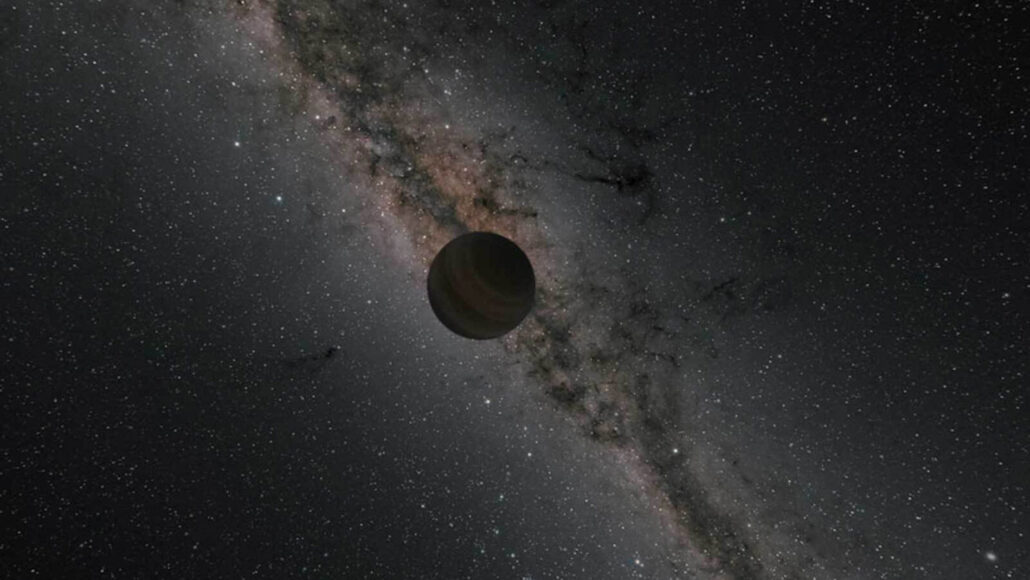
While nothing remains to be said for those lamentable bodies (and living things – if any) that get disastrously into their parent suns, it’s not exactly ‘The End’ for those now dark vagrants. There could be multi (at least thousands) of stranded planets (of all sizes and cosmetics) in profound space past the brilliant light and sun oriented energy of a sun. There could be a vagrant planet inside a light year of us and we’d never be aware or suspect.
Could vagrant planets shape without help from anyone else in the profundities of desolate space? All things considered, on the off chance that a huge interstellar residue and gas cloud can gravitationally fall to shape a star(s) and related heavenly (planetary group, I neglect to see the reason why a more modest interstellar residue and gas cloud couldn’t fall to frame a planet measured object, presumably a ‘bombed star’ like a Jupiter, perhaps with moons. From that obviously it is not difficult to extrapolate and propose such a Jovian ‘bombed star’ could have more modest homesteads (planets) structure and circle same – an almost undetectable planetary group. Or then again maybe it’s simply a vagrant planet with related moons. Either definition adds up to exactly the same thing – a rose by some other name applies.
Notwithstanding starting beginning, the standard way of thinking would recommend that these vagrants should be dormant, regardless of whether before the occasion they had life.
At the point when I was a secondary school science understudy (1962-63), it was totally gospel (and no correspondence would be placed into opposite) that our sun was the most important thing in the world of the presence of earthbound life. No sun; no life. All life at last relied upon photosynthetic plants which thusly couldn’t exist without daylight. And still, at the end of the day anyway I appear to review hypothesis (Carl Sagan?) about the chance of a non-photosynthetic based biology in the climate of Jupiter which delighted my heart no closure – in any case, it wasn’t Jupiter that broke the photosynthetic form, however old fashioned Mother Earth herself. So gospel ain’t gospel any longer! Today we are familiar chemosynthesis (living beings that can create organics from inorganic substances and get energy from the interaction.)
A notable, assuming minimal comprehended illustration of chemosynthesis are the settlements of organisms (named ‘rusticles’) that are eating the iron design of the RMS Titanic, resting nearly four kilometers underneath the outer layer of the North Atlantic. Inside another age or two, the well known wreck will have been essentially consumed by microorganisms, with next to no help gave by our sun.
Yet, a stranded planet has extreme issues very separated from an absence of sun oriented energy. And heat? Wellsprings of intensity (aside from a parent sun) incorporate gravitational withdrawal, radioactivity, substance action, grinding, and so forth. So heat ought not be an over the top issue for a few planetary houses. Rough planets like Earth have radioactive components that incompletely contain their outside layers and insides, and radioactive rot radiates intensity, and rock is a decent separator. I question assuming substance movement or grating will contribute a lot, yet for Jupiter-sized planets, gravitational compression implies that these kinds of planets (like Jupiter, Saturn, and Neptune) emit more intensity energy than they get from the sun.
Obviously erosion could be a wellspring of intensity in a few uncommon cases. Another warming situation is conceivable on the off chance that a vagrant planet had a satellite(s) of the right piece. The satellite(s) may be warmed by flowing frictional powers coutesy of their parent stranded planet similar to what we see on Io and Europa. These satellites are warmed by the impacts of Jupiter’s flowing attractions on the insides of these moons which get flexed and extended and compacted, consistently shifting back and forth between limits. The subsequent erosion brings about warming. An elective adaptation could be two stranded planets of generally a similar size, circling each other in moderately nearness. Each would commonly tidally heat the other, yet just for some time. You can’t create heat energy from nothing, and the cost paid would be their orbital partition expanding until the gravitational securities debilitate such a lot of that you’d have – in every practical sense – two separate stranded planets. This is likened to our own Moon which is withdrawing from Mother Earth, yet leisurely, over the long haul.
 Scienology
Leave a comment