
Natural chemistry
Natural chemistry, once in a while called organic science, is the assessment of compound frameworks inside and connecting with living creatures. Biochemical procedures proposition to ascend to the inclination of life.
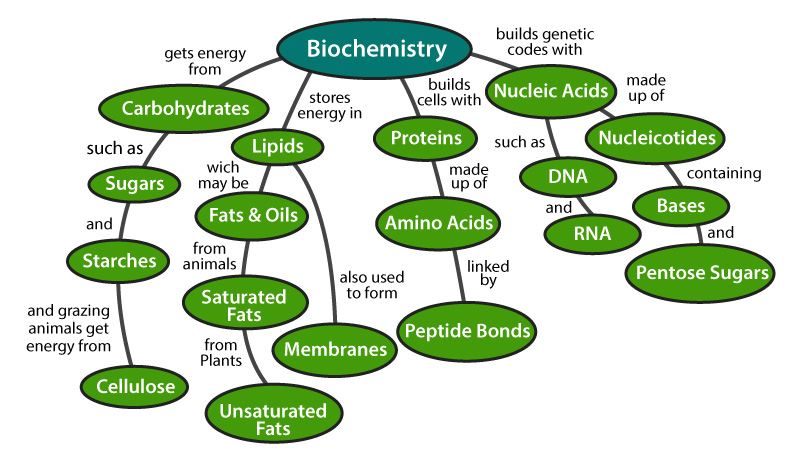
A sub-discipline of both science and science, organic chemistry can be confined into three fields; nuclear innate characteristics, protein science, and processing. All through the latest numerous long stretches of the 20th hundred years, organic chemistry has through these three disciplines ended up being successful at explaining living systems. Essentially all zones of the presence sciences are being uncovered and made by biochemical method and examination. Natural chemistry focuses on perceiving how regular molecules offer climb to the methods that occur inside living cells and between cells, which consequently relates phenomenally to the assessment and understanding of tissues, organs, and creature design and limit.
A great deal of organic chemistry deals with the designs, capabilities, and coordinated efforts of natural macromolecules, for instance, proteins, nucleic acids, starches, and lipids, which give the construction of cells and play out countless the capabilities related with life. The study of the cell similarly depends upon the reactions of more diminutive iotas and particles. These can be inorganic, for example, water and metal particles, or regular, for example, the amino acids, which are used to join proteins. The frameworks by which cells saddle imperativeness from their condition through substance reactions are known as absorption. The revelations of natural chemistry are associated fundamentally in medicine, food, and cultivating. In drug, natural scientists investigate the causes and fixes of ailments. In food, they consider how to keep up prosperity wellbeing and focus on the effects of nourishing lacks. In agriculture, regular scientific experts investigate soil and manures and attempt to track down ways to deal with further develop crop development, crop capacity, and irritation control.
- 700-760 Exam Dumps (2024)
- 700-765 Exam Dumps (2024)
- 700-805 Exam Dumps (2024)
- 700-821 Exam Dumps (2024)
- 700-846 Exam Dumps (2024)
- 700-905 Exam Dumps (2024)
- 820-605 Exam Dumps (2024)
Beginning materials: The synthetic components of life:
Around two dozen of the 92, regularly happening synthetic components are fundamental to various kinds of natural life. Most remarkable components on Earth are not needed by life, while several normal ones are not used. Most living beings share part needs, yet there are two or three differences among plants and creatures. For example, ocean green development use bromine, yet land plants and creatures seem to require none. All creatures require sodium, yet a couple of plants don’t. Plants need boron and silicon, in any case, creatures may not.
Just six components carbon, hydrogen, nitrogen, oxygen, calcium, and phosphorus-make up essentially the vast majority of the mass of living cells, consolidating those in the human body. Despite the six important components that make most out of the human body, individuals require humbler proportions of maybe 18 more.
Biomolecules:
The four essential classes of particles in natural chemistry are starches, lipids, proteins, and nucleic acids. Various natural particles are polymers: in this expressing, monomers are respectably minimal miniature atoms that are associated together to spread the word about broad macromolecules as polymers. Exactly when monomers are associated together to consolidate a natural polymer, they experience a method called parchedness combination. Particular macromolecules can gather in greater buildings, routinely expected for organic action.
Sugars:
Two of the essential components of sugars are imperativeness accumulating and giving construction. Sugars are starches, yet not all carbs are sugars. There are a greater number of carbs on Earth than some other known sort of biomolecule; they are used to store imperativeness and genetic information, similarly as expect basic positions in a cell to cell collaborations and correspondences.
The most un-troublesome kind of starch is a monosaccharide, which among various properties contains carbon, hydrogen, and oxygen, by and large in an extent of 1:2: 1. Glucose (C6H12O6) is a champion among the most fundamental starches; others integrate fructose (C6H12O6), the sugar commonly associated with the sweet taste of natural items, and deoxyribose (C5H10O4). A monosaccharide can switch between non-cyclic (open-chain) structure and a cyclic construction. The open-chain construction can be changed into a ring of carbon particles associated by an oxygen particle produced using the carbonyl social occasion of one end and the hydroxyl get-together of another. The cyclic molecule has a hemiacetal or hemiketal gathering, dependent upon whether the straight construction was an aldose or a ketose.
 Scienology
Leave a comment